
Opening your mailbox to find a notice from the Social Security Administration claiming you owe thousands can be alarming. For many seniors and people on disability, the fear of losing part of their monthly benefits is immediate. In these situations, understanding options like an SSA overpayment waiver becomes critical, since they can be the difference between financial strain and maintaining basic stability.
In many cases, these overpayments are tied to administrative errors rather than intentional actions by the recipient. If repayment would create hardship or the mistake was not your fault, relief options may be available. Knowing your rights allows you to respond instead of react. Taking that step can help protect your income and pause the collection process.
Who qualifies for an SSA overpayment waiver
To successfully qualify for an SSA overpayment waiver, the law generally requires you to meet two specific criteria.
First, you must prove that the overpayment was “without fault” on your part—meaning you didn’t provide false information or fail to report changes that you knew would affect your benefits.
Second, you must show that paying the money back would either “defeat the purpose” of the Social Security Act by depriving you of money needed for ordinary living expenses or be “against equity and good conscience”.
If the overpayment amount is $1,000 or less, the SSA may even grant an “administrative waiver” with much less paperwork if they determine the cost of collecting the debt is higher than the debt itself.
However, for larger amounts, you will need to provide a detailed breakdown of your monthly expenses to prove that losing a portion of your check would leave you unable to pay for food, medicine, or housing.
This legal safety net is designed to ensure that a government mistake doesn’t result in a citizen’s homelessness or extreme poverty.
Step-by-step guide to requesting an SSA overpayment waiver
Requesting an SSA overpayment waiver is a formal process that requires specific documentation.
Once you submit your request, the SSA is legally required to stop all collection efforts and garnishments until a final decision is made on your case.
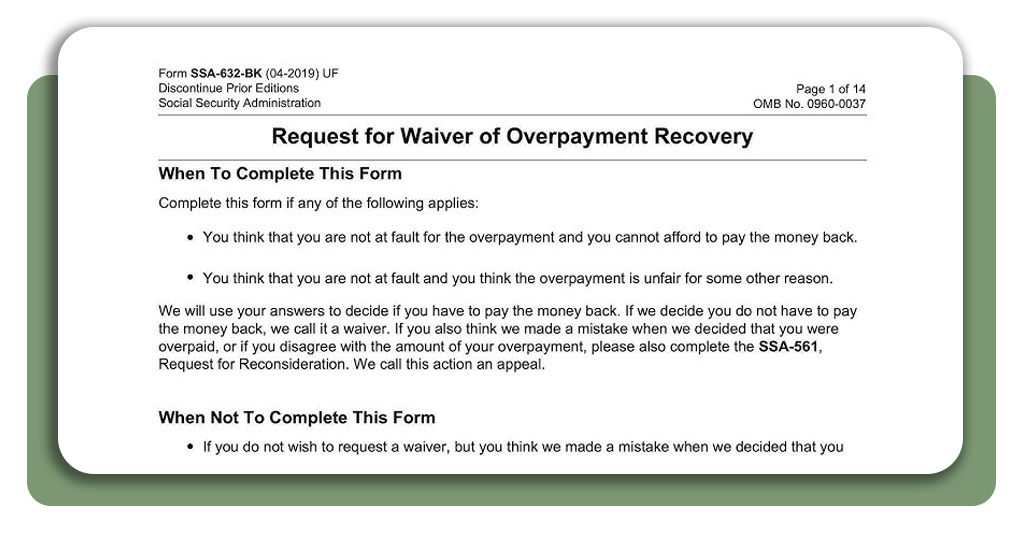
Step 1: obtain form SSA-632
Visit the official SSA website or your local office to download the “Request for waiver of overpayment recovery” form, also known as form SSA-632.
Step 2: explain why it wasn’t your fault
Complete the section of the SSA overpayment waiver form where you describe exactly why you believed your payment amount was correct at the time you received it.
Step 3: document your monthly finances
List every recurring expense, including rent, utilities, and medical costs, to demonstrate that you do not have the “excess income” required to pay the debt back.
Step 4: submit your request to the SSA
Mail or hand-deliver the completed paperwork to your local social security office and ask for a stamped receipt to prove you have officially started the waiver process.
Step 5: attend a personal conference if necessary
If your initial SSA overpayment waiver is denied, you have the right to a personal conference with a representative to explain your situation in person before a final ruling.
Do you need to pay to request an SSA overpayment waiver
A common misconception is that you need to hire an expensive attorney or pay a processing fee to ask the government for forgiveness. In reality, there is absolutely no cost to file a request for an SSA overpayment waiver.
The forms are free, and the SSA employees are required to help you understand the requirements if you visit an office in person.
While some debt relief services may offer to “manage” the process for you for a fee, you can handle the entire application yourself using the official resources provided by the government.
If you find that your benefits are still tight even after a successful waiver, you can use tools like a retirement benefits simulator to help forecast your future income more accurately and avoid future overpayment traps.
Most overpayments occur during the transition into retirement or when a beneficiary returns to part-time work, so staying ahead of the math is your best defense against future letters from the treasury.
Safety tips before sharing information about overpayment
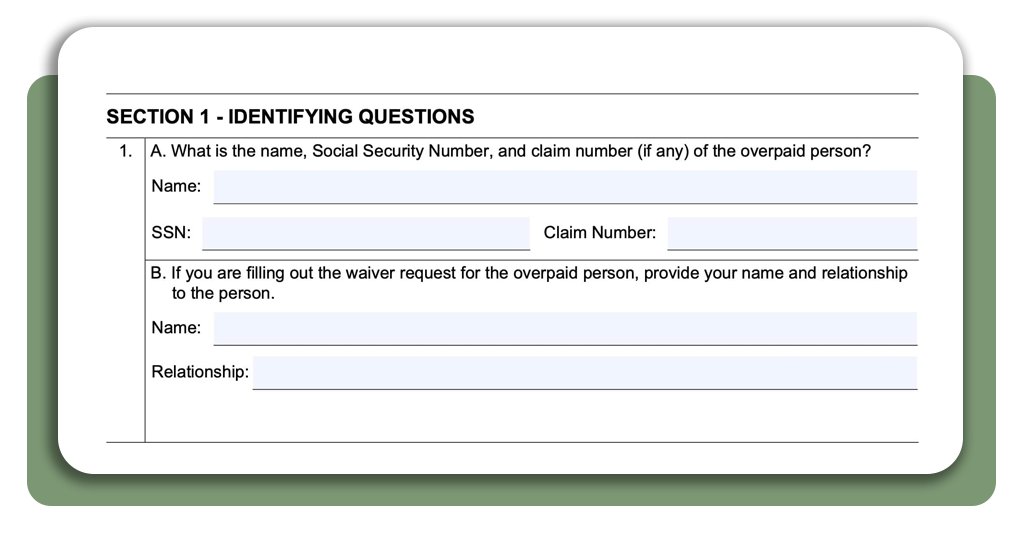
Because the fear surrounding government debt is so high, scammers often target people by pretending to be SSA agents who can “clear” your debt in exchange for a gift card or wire transfer.
Always remember that the official SSA overpayment waiver process is done through written forms and verified government channels.
According to SSA.gov, the agency will never threaten you with arrest over an overpayment or ask for payment over the phone using untraceable methods.
Before sharing your Social Security number or financial details with any “help” service, verify that they are a legitimate legal aid organization or a recognized nonprofit.
Dealing with federal debt is stressful enough without falling victim to identity theft. Stick to official SSA forms and verified resources to ensure your data stays private while you fight for your financial relief.
Protecting your livelihood from federal debt
Receiving a notice of debt from the government feels like a battle you can’t win, but the waiver system exists specifically to protect people from being crushed by administrative errors.
Don’t think of an SSA overpayment waiver as a “handout”—but as a legal right designed to keep the social safety net intact for those who need it most.
At CredHelper, we believe that the most powerful tool a citizen has is the knowledge of how to navigate these complex systems.
You don’t have to live in fear of the next check being garnished; take the steps today to file your request, document your hardship, and reclaim the peace of mind you deserve.