
A debt management sequence could be the exit ramp you need. Card interest climbs past 29% APR, and minimum payments barely touch the principal. This guide covers who qualifies, how free counseling works, and what to expect.
What debt relief programs are and who may qualify
Relief programs aren’t reserved for financial emergencies. By way of a debt management strategy, a non-profit organization negotiates a deal with your creditors. The counselor negotiates, often cutting interest rates sharply.
Most qualifying borrowers carry $5,000 or more in unsecured card debt. Credit score isn’t the main deciding factor — income stability and the ability to make one consolidated monthly payment matter more.
- High-interest revolving balances: cardholders stuck at 25%–29% APR with no realistic path to paying down principal;
- Multiple open accounts: managing four or more cards makes one consolidated payment genuinely simpler;
- Stable income, tight cash flow: you earn enough to repay, but compounding interest keeps pulling you back.
These are not debt settlement arrangements — you repay every dollar owed, just at a negotiated rate on a fixed schedule. That distinction matters significantly for your credit report and long-term standing.

Why current interest rates make negotiation more valuable
CBS News recently explained why credit card rates remain elevated in 2026. That context matters — the higher the rate you’re currently paying, the more a negotiated reduction through a non-profit plan is worth.
Step-by-step: how to check eligibility for a debt management plan
Checking eligibility takes about 60 seconds, completely free of charge. This process goes through the National Foundation for Credit Counseling, the largest non-profit counseling network in the country.
Their online tool reads your debt load and surfaces a result before you speak with anyone. This provides you with an instant overview of your situation and a real chance to recover.
Step 1: Open the NFCC eligibility quiz
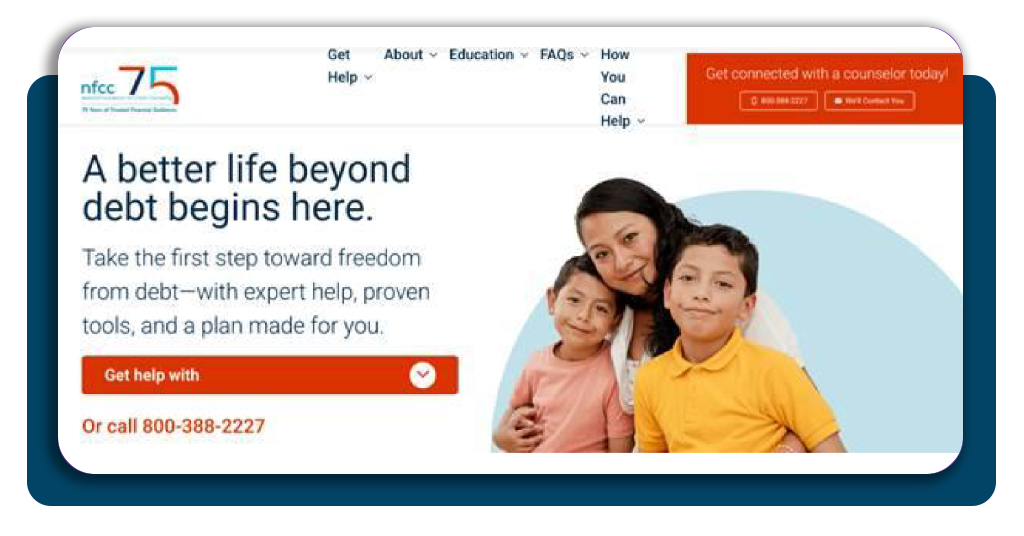
Go to the official website of NFCC and find the eligibility quiz on the homepage. No login or account is needed at this stage. The check wraps up in under two minutes and won’t touch your credit score.
Step 2: Enter your debt and income details
Input your estimated total unsecured debt and your gross monthly income. No credit check runs at this point, so your score stays intact. You’ll also flag which creditors to include before moving forward.
Step 3: Review your projected savings
The results page shows your new estimated monthly payment, projected interest rate, and months to full payoff. Most plans run 36 to 60 months. Use those numbers to decide if starting a personalized assessment.
Step 4: Connect with a certified counselor
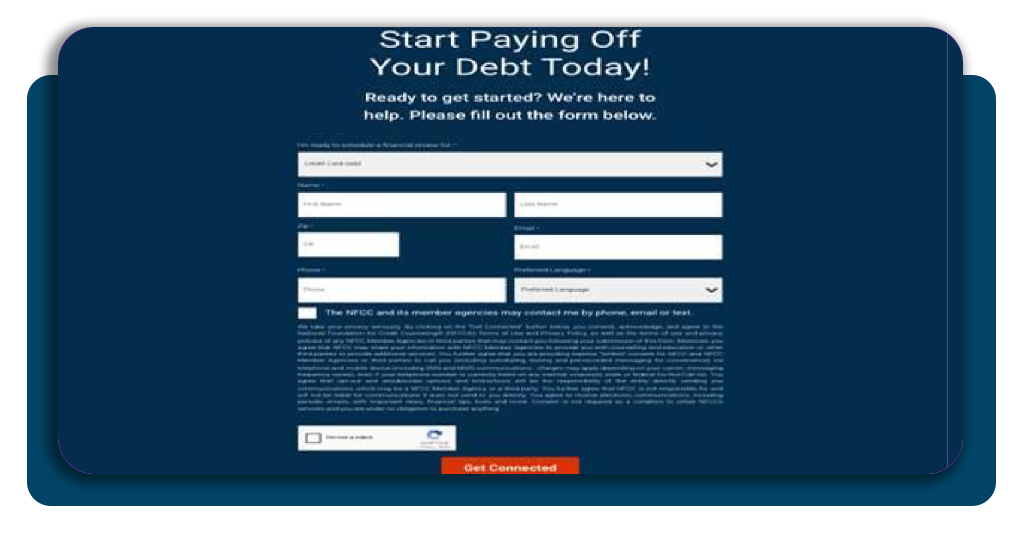
If the numbers look right, schedule a free session with an NFCC-certified counselor. They confirm which accounts qualify and build the repayment proposal directly with your creditors. No obligation to enroll follows the consultation.
How free credit counseling evaluates your situation
Every session starts with a full budget snapshot. The counselor maps monthly income against all minimum payments across enrolled accounts. That baseline shows whether a plan leaves real breathing room after fixed expenses each month.
Professional counselors go over every aspect to make sure your tailored plan stays long-term. This whole strategy guarantees that every phase matches your financial objectives exactly.
- Budget review: gross income is weighed against total minimums and essential living costs to confirm repayment capacity;
- Creditor outreach: the agency contacts each issuer directly to confirm which interest rate reductions are available;
- Account screening: promotional balances, secured loans, and business cards are flagged early if they fall outside eligibility.
Rate cuts of 8% to 10% APR are common for accounts sitting above 25%. The consultation carries no cost and no commitment — you review the full proposal before deciding whether to move forward.
What to review before enrolling in any relief program
Not every ‘relief’ program is a non-profit arrangement. For-profit debt settlement carries different consequences — fees, potential tax liability on forgiven balances, and a harder hit to your credit profile. The distinction is worth knowing.
Fees, risks, and interest reduction expectations
NFCC-member agencies work under state-regulated fee caps. Setup costs land between $25 and $50, with monthly fees always remaining transparent and rarely sitting above $75.
Through industry-wide standards for a debt management framework, one can examine standard rate reductions by the issuer. Before committing, this offers a reference. Before registering, three compromises worth considering:
- Card closure: enrolled accounts are typically closed during the plan, temporarily raising your utilization ratio;
- Score recovery: most participants see their score stabilize within 12 to 18 months of consistent on-time payments;
- No principal forgiveness: savings come entirely from lower interest — the full balance gets repaid over the plan term.
Going in with those expectations set makes a 48- or 60-month commitment far more manageable. Surprises mid-plan are the main reason people drop out, so clarity upfront is worth taking seriously.

The first step costs nothing — and the math usually speaks for itself
High-interest debt compounds quietly until the numbers stop making sense. A debt management protocol replaces that cycle with one payment, a fixed end date, and a rate that your creditors already agreed to.
The eligibility check is free, and no obligation follows it. Certified counselors from the program evaluate your financial health to ensure you receive the most effective guidance.
At CredHelper, we serve as your financial ally by providing the clear options you need to evaluate your situation better. Our resources help you cut through the noise so you can find a solution that actually fits.