
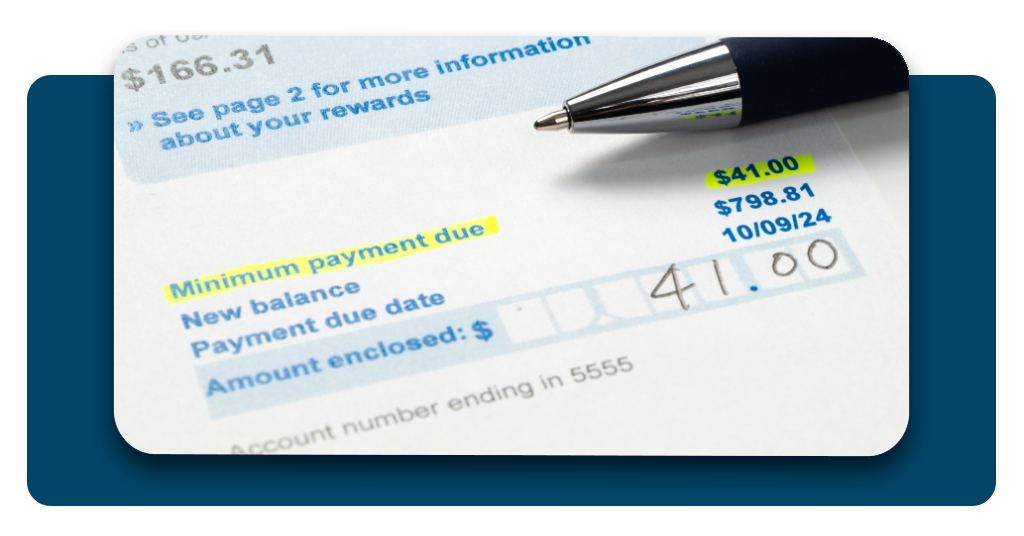
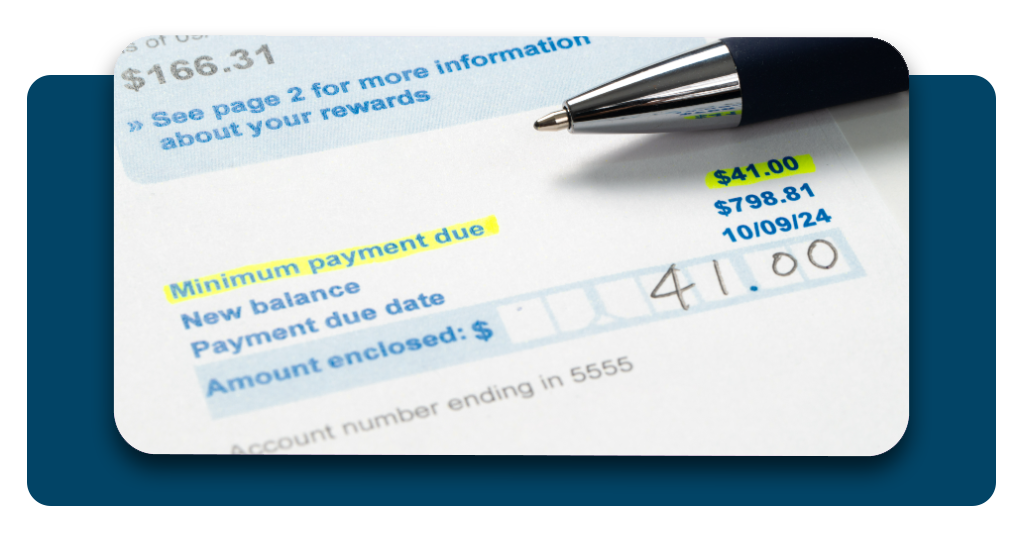
This month’s credit card bill lands; you decide to pay the minimum balance due, check it off the list, and get on with your week. There’s no late fee, the account’s in good standing, and that feels like enough for now. What nobody tells you is that the remaining $800.00 sitting on that card is already being worked on by an interest rate that doesn’t take a single day off.
The thing about credit card debt is that the math behind it is rarely explained to you up front, and that works out pretty well for the people collecting your interest. CredHelper put this guide together so you’d have a full look at what minimum payments do to your balance over time, what they cost you, and how a few different approaches can change your outcome. Keep reading and learn how to take back control of what you owe.
Read Also: Strategies to pay off high-interest credit card debt
What you need to know about paying the minimum balance
Credit card companies make the minimum payment option look like a safety net, and for a lot of people, it becomes the default every single month without much thought.
When you pay the minimum balance on your card and carry the rest forward, you’re agreeing to a deal where interest gets added before your next bill even arrives.
The amount due each month is calculated to keep you in good standing while keeping your balance alive long enough for the card issuer to collect a significant amount in interest charges.
Why do minimum payments increase total debt
Your minimum payment covers the interest charges first, and whatever’s left over goes toward the actual balance, which means the principal barely moves from one month to the next.
If your card carries a 24% APR and you owe $1,500, a minimum payment of around $35 wipes out most of the interest while reducing your actual debt by only a few dollars.
That’s how a balance that seems manageable stretches into years of payments, because the math is set up to keep you paying interest for as long as possible.
The number hiding in plain sight on your statement
Federal law requires card issuers to include a minimum payment warning on every statement, showing how long it’ll take to clear your balance if you never pay more than the minimum.
To pay the minimum balance and nothing else on a $2,000 debt at 22% APR could mean taking over a decade to pay it off and spending nearly as much again in interest alone.
That warning sits right there on your monthly statement, and most people scroll past it without registering what it’s actually telling them about the real cost of their debt.
Your card issuer is not rooting for you
The minimum payment is not calculated with your financial well-being in mind; it’s calculated to keep your account current while maximizing the interest the issuer collects over time.
Every month you pay the minimum balance and leave the rest sitting there; the card issuer earns interest on that remaining amount, and the cycle resets all over again the following month.
Card issuers are required to show you a path to paying off your debt in 36 months on your statement, but that information tends to get buried under everything else on the page.
Step-by-step: what happens when you only pay the minimum
Most people assume that making a payment, any payment, is moving them in the right direction, but the mechanics of minimum payments tell a more complicated story.
When you decide to pay the minimum balance and leave the rest on the card, your billing cycle resets, but your debt doesn’t shrink in any meaningful way that month.
The process that follows is the same every single month, and the longer it runs, the harder it becomes to close the distance between what you owe and what you’re paying.
Step 1: your payment posts, but interest does not stop
Your card issuer applies your payment to interest charges first, and only after those are covered does anything go toward reducing the actual amount you borrowed in the first place.
On a $1,500 balance at 23% APR, your minimum payment might be around $37.00, but nearly $29.00 of that goes straight to interest, leaving about $8.00 chipping away at the principal.
That $8.00 reduction is what your month of carrying debt bought you, and next month the whole calculation starts again from a balance that’s barely changed at all.
Step 2: your new balance grows despite paying
This is where things get awkward. If you use the card again before the next statement closes, your balance goes back up before you’ve made any progress on what you already owed.
Deciding to pay the minimum balance while still making purchases means your principal never gets a chance to drop, because new charges keep refilling what little the payment took off.
Even without new purchases, the interest added each month can outpace what the minimum payment removes, which means your balance can actually be higher than it was thirty days ago.
Step 3: the debt cycle locks in and compounds
Once your balance stops dropping, your minimum payment amount adjusts with it, and the issuer recalculates what you owe based on a balance that interest has been inflating monthly.
Every time you pay the minimum balance on a debt that compound interest is growing, you’re paying more in total than the original purchase or expense that created the balance.
A $2,000 balance at 20% APR paid down with minimum payments alone could take well over ten years to clear and cost you close to $2,000 in interest on top of the original debt.
Read Also: How to avoid credit card interest completely with smart strategies
Long-term impact on interest and balance
The short-term relief of a minimum payment starts to look very different once you zoom out and see what that habit is doing to your finances over months and years.
Credit card interest compounds, which means the longer a balance sits on your card, the faster the total amount you owe tends to grow with each passing billing cycle.
The real cost of choosing to pay the minimum balance on your card never shows up on a single statement; it reveals itself gradually in the total you’ve paid versus what you originally borrowed.
A small balance balloons over the years
A $1,000 balance at 22% APR sounds manageable until you run the numbers and realize minimum payments alone could stretch that debt out to eight or nine years of monthly charges.
By the time that balance is finally cleared, you’ll have paid somewhere between $800.00 and $1,000 in interest on top of the original $1,000, doubling the cost of whatever you charged.
A modest amount left on a high-APR card compounds into something much heavier over time, and the starting balance matters far less than the rate and the payment habits attached to it.
Your credit score takes a quiet hit
Credit utilization, which is the percentage of your available credit you’re currently using, accounts for a significant portion of how your credit score gets calculated every single month.
When you carry a charge and only pay the minimum balance, your utilization ratio stays elevated, and that number being high is one of the more reliable ways to pull your score down.
A utilization rate above 30% affects your score noticeably, and a balance that barely moves month to month keeps that rate sitting in a territory that credit bureaus don’t look at favorably.
New purchases lose their grace period
Most credit cards offer a grace period on new purchases, meaning you won’t be charged interest on them if you clear your full balance before the due date arrives each month.
When you pay the minimum balance and carry a remaining balance forward, that grace period disappears entirely, and new purchases start accruing interest from the day you make them.
A grocery run or a gas fill-up charged to the card starts costing you more than the sticker price the second the transaction goes through on an account carrying a balance forward.
Better strategies to reduce credit card debt
Getting out of credit card debt on your own terms requires a different approach from what the card issuer’s billing statement is designed to encourage you to take each month.
The decision to stop letting yourself pay the minimum balance as a default opens up options that actually move your balance in a direction you can feel within a few billing cycles.
None of these approaches requires a perfect financial situation to work, but you need consistency and an understanding of where your money is going every time a payment is due.
Pay above the minimum every single time
Adding even $20.00 on top of your required minimum payment each month changes the math, because more of your money starts landing on the principal instead of the interest.
On a $1,500 balance at 21% APR, paying $80.00 a month instead of the $30.00 minimum could cut years off your repayment timeline and save you hundreds of dollars in interest.
You don’t have to pay a high amount above the minimum to make a real difference, but it needs to be enough to keep the principal moving in the right direction each month.
Attack one card balance at a time
Spreading extra funds on multiple cards slows everything down, and if you’ve been happy to pay the minimum balance on each one, none of them are moving fast enough to make a dent.
The debt avalanche method targets the card with the highest APR first, reducing the interest you’re paying across all your accounts while the other cards receive their minimum payments.
The debt snowball method takes the opposite approach, targeting the smallest balance first to build a sense of progress that keeps you motivated to stay on track with the larger debts.
Transfer your balance to buy breathing room
A balance transfer card with a 0% introductory APR gives you a window, usually between 12 and 21 months, where every dollar you pay goes directly toward reducing the principal balance.
Carrying a charge on a high-APR card and having to pay the minimum balance each month while interest eats most of it is exactly what a 0% balance transfer card is built to interrupt.
Balance transfers do come with fees, around 3% to 5% of the amount transferred, so it’s worth calculating whether the interest savings over the promotional period outweigh that upfront cost.
Read Also: The Secret to Keeping Credit Utilization Below 30%
Stop feeding the debt and start ending it
Credit card debt has a way of feeling manageable right up until the numbers tell a different story, and the minimum payment system is a big part of why that happens to so many people.
In this CredHelper guide, we showed what it truly costs to pay the minimum balance every month and why that habit tends to work out better for the card issuer than it does for you.
Browse more CredHelper articles to get a clearer picture of how interest works across different types of debt and what you can do to make sure more of your money works in your favor.